



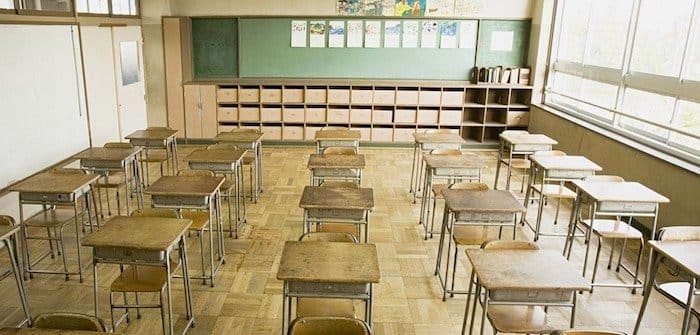

Orange County Public Schools has approximately 7,672 fewer students than it did a year ago, a preliminary decline large enough to affect budget decisions, staffing, transportation, classroom offerings and the future use of some district buildings.
By Kevin Seraaj, J.D., M.Div., Orlando Advocate News Team
Analysis
Superintendent Maria Vazquez disclosed the figures after the district’s 10-day enrollment count, an early benchmark used to assess how many students are attending schools at the start of the academic year. District leaders said elementary schools experienced the largest losses.
The preliminary decrease was far larger than the roughly 2,000-student decline that officials said had been anticipated in state enrollment estimates. The final count, budget effects and school-by-school changes will require further review, but the early number adds pressure as OCPS prepares for its final budget hearing Sept. 8.
Central Florida Public Media has reported that OCPS enrollment has declined for three consecutive school years, including losses of more than 3,000 students in 2024-25, more than 6,000 students in 2025-26 and nearly 8,000 students this year. Those numbers should be evaluated carefully because preliminary enrollment counts, final enrollment totals, and state funding calculations can measure different things.
Still, the direction of the trend is clear: fewer students are attending Orange County’s traditional public schools.
That does not automatically establish a single cause.
District officials and School Board members have pointed to several possible factors, including lower birth rates, changes in household demographics, a slower housing market, uncertainty affecting some immigrant families and expanded state scholarship programs that allow more families to choose private-school, home-school or other education options.
Each explanation may be part of the picture. None, standing alone, adequately explains a systemwide decline of this size without more detailed public data.
Housing and enrollment
Housing costs may be a significant factor, particularly in established neighborhoods near long-standing schools.
High rents and home prices can make it harder for young families to live near the schools they prefer. At the same time, older homeowners may remain in homes after their children have graduated, changing the number of school-age children in a neighborhood even if the broader population remains stable.
New housing construction does not necessarily solve that problem. Growth may occur in parts of the county far from schools with unused classroom space, while schools in older neighborhoods lose enrollment. The result can be a mismatch: crowding or demand in some communities, declining enrollment in others and difficult decisions about where to assign staff, maintain buildings and operate bus routes.
A closer review should identify which schools and neighborhoods are losing students, which are growing and whether the changes are tied to affordability, family mobility, redevelopment, new construction or demographic shifts.
Funding and facilities
Enrollment matters because Florida school funding is tied, in part, to student membership. A smaller student count can mean less revenue, even when OCPS still must maintain campuses, pay utility bills, operate bus routes, provide meals, support technology systems and serve students with specialized needs.
The financial effect is not always immediate or proportional. A school cannot necessarily eliminate the costs of a building, principal, cafeteria, transportation route or specialized program simply because it has fewer students. That makes sustained declines especially difficult for large districts with facilities designed for higher enrollment.
OCPS has already approved consolidations, closures and staffing reductions while responding to enrollment and budget pressure. The new preliminary count makes the upcoming budget process more consequential, particularly for communities that could face fewer programs, reassigned staff or future discussions about repurposing school buildings.
The district should clearly explain which budget decisions are already reflected in the proposed spending plan, which could change after final enrollment figures are confirmed and what enrollment level would trigger additional reductions.
Immigration uncertainty
District leaders have cited uncertainty affecting some immigrant families, including families connected to Temporary Protected Status, as one possible element in the decline.
That concern deserves careful reporting, not speculation. OCPS has not publicly established how many students left the district because of immigration-policy changes, which schools were most affected or what share of the total decline can be linked to that issue.
The district should provide any available data from withdrawal records, family surveys, enrollment trends or geographic analysis. Without that information, immigration-related uncertainty should be understood as a possible contributing factor rather than a proven explanation for the overall enrollment decrease.
Vouchers and school choice
Florida’s expanding scholarship system also warrants closer examination.
The state has broadened programs that allow families to use public funds for private-school tuition and certain home-education, tutoring and other approved education expenses. Supporters say the programs give parents greater control and more choices. Critics argue that they divert public resources from traditional public schools and do not always impose the same accountability, access and transparency standards required of school districts.
But the key Orange County question is more specific: how many students who are no longer enrolled in OCPS moved into private-school scholarship programs, home education, charter schools, virtual programs or schools outside the county?
A growth in voucher use does not necessarily mean that every scholarship recipient previously attended OCPS. Some may have already been enrolled in private school or educated at home. Before officials or advocates draw conclusions, the public needs local data showing how many students actually left district schools, where they went and how much funding followed them.
The same review should examine whether private institutions receiving publicly supported scholarship money offer comparable access for students with disabilities, transportation needs or specialized academic services.
What residents need to see
The 7,672-student decline raises questions that cannot be answered only with a districtwide total.
To help families, employees and communities understand the impact, OCPS should publish school-level information showing:
Year-over-year enrollment changes at every school
The difference between projected and actual enrollment
The estimated effect on district and school budgets
Student transfers to charter schools, private schools, home-education programs, virtual programs or other districts, to the extent available
Vacant positions, staffing adjustments and proposed reductions
Schools under consideration for consolidation, closure, repurposing or boundary changes
Transportation savings, added costs or route changes
Effects on arts, athletics, career programs, special education and other specialized instruction
Areas where officials believe immigration-policy uncertainty has affected enrollment, along with the data supporting that conclusion
Neighborhoods with increasing enrollment or crowded schools despite districtwide losses
Publishing that information would not solve the enrollment problem. It would, however, give the public a clearer basis for judging whether the district’s response is equitable, financially responsible and attentive to the communities most affected.
A broader policy question
The enrollment drop is not necessarily evidence of an OCPS management failure. It may reflect a combination of demographic change, housing pressures, family mobility, state education policy and other forces beyond the district’s direct control.
But the consequences will be local and immediate.
If declining enrollment leads to fewer teachers, reduced electives, longer bus rides, consolidated campuses or less access to specialized programs, the effects will be felt by students and families school by school—not as an abstract districtwide number.
The coming budget hearing offers OCPS an opportunity to explain what it knows, what remains uncertain and how it will protect students while responding to a changing enrollment reality.

- Kevin Seraaj

- Kevin Seraaj

- Kevin Seraaj

- Kevin Seraaj


